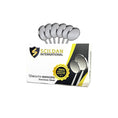
Operative Instruments
Operative dentistry instruments are the hand instruments used to examine a tooth, remove decay, and place and shape a filling. This collection covers instruments for cavity preparation and restoration, including excavators, composite filling instruments and matrix retainers, along with the mirrors, explorers and pliers used beside them. Choose by procedure and technique, then confirm the pattern, material and pack size on each product page.
How to choose operative dentistry instruments
Start with the procedures you perform most, because a clinic placing mainly composite fillings needs a different set from one doing extractions or orthodontics. Then check these points before you order:
• Function: match the working end to the step, whether that is examining, cutting, placing, shaping or isolating.
• Pattern: instruments with the same name come in different shapes, so read the description to confirm the working end suits your technique.
• Single or double ended: double-ended instruments reduce instrument changes during a procedure, while single-ended ones keep one working end in play at a time.
• Material: stainless steel is the usual choice for hand instruments because it withstands repeated sterilization. Check the product page, or ask us, for autoclave guidance.
• Pack size: some items, such as mouth mirrors, are sold in packs, which suits busy clinics and student kits.
Examples on this store include the Darby Perry excavator, the Tofflemire matrix retainer, a universal matrix retainer with cheek protection and a six-piece composite instrument kit.
Operative dentistry instruments by type and use
This table groups common operative instruments by the job they do.
|
Group |
Typical instruments |
What they do |
|
Examination |
Mouth mirror, explorer, probe, cotton pliers |
View and check tooth surfaces, find decay and handle cotton rolls |
|
Hand cutting |
Excavators, chisels, hatchets, hoes |
Remove softened decay and refine cavity walls and margins |
|
Condensing |
Pluggers (condensers), amalgam carriers |
Carry and pack restorative material into the prepared cavity |
|
Composite and plastic filling |
Composite instruments, plastic filling instruments |
Place and shape tooth-coloured filling material |
|
Carving and burnishing |
Carvers, burnishers |
Shape the surface of a filling and smooth it |
|
Matrix and isolation |
Matrix retainers, matrix bands, cheek retractors |
Hold a band around the tooth so a filling between teeth can be shaped, and keep soft tissue back |
|
Rotary |
Burs, handpieces |
Cut and finish with power (see the note below the table) |
Burs and handpieces are rotary instruments and are listed separately under dental handpieces and restorative materials.
Choosing instruments for your setting
General dental clinics
Keep a core set at each chair: mirror, explorer, cotton pliers, excavator, a composite or plastic filling instrument and a matrix retainer. Mirrors and explorers are also listed under diagnostic instruments.
Dental students
Check your college's instrument list first. Build around the examination set, then add cutting and filling instruments as your clinical rotations require.
Clinics moving to tooth-coloured fillings
Start with composite instruments and matrix systems, then pair them with dental composite and the other materials you need.
Caring for and sterilizing operative instruments
Clean operative instruments soon after use, sterilize them as the manufacturer directs, and store them dry.
• Rinse and brush off debris before it dries, or use an ultrasonic bath.
• Dry the instruments, then sterilize them as instructed. Use an autoclave only where the product is suitable for it.
• Store dry, with sharp tips protected.
• Inspect tips, hinges and mirrors regularly. Replace bent instruments, and sharpen or replace dull cutting instruments.